

How to ensure the tea bottle is easy to open?
As a tea bottle supplier, one of the key aspects we focus on is ensuring that our tea bottles are easy to open. This seemingly simple feature can significantly enhance the user experience, making our products more appealing to customers. In this blog post, I'll share some strategies and considerations that we take into account to guarantee that our tea bottles are user - friendly in terms of opening.
Design Considerations
1. Lid Design
The lid is the first point of contact when a user wants to open a tea bottle. A well - designed lid can make all the difference. We use a variety of lid types, each with its own advantages.
For example, screw - on lids are a classic choice. To make them easy to open, we pay attention to the thread pitch. A wider thread pitch means that less force is required to turn the lid. We also ensure that the lid has a sufficient diameter. A larger lid provides more surface area for the user to grip, making it easier to apply torque.
Another type of lid we offer is the snap - on lid. These lids are designed to create a tight seal but also be easy to remove. We use high - quality, flexible materials for the snap - on mechanism. The edges of the lid are rounded and smooth, so that users can easily get their fingers under the lid to pry it open.
2. Grip Surface
A good grip surface on the bottle and the lid is essential for easy opening. We incorporate various textures on the exterior of our tea bottles. For instance, some of our Bubble Milk Tea Bottle models have a ribbed pattern on the lid. This ribbing provides friction, allowing users to get a better hold on the lid.
On the bottle body, we also add textured areas near the top. These areas are strategically placed so that when a user holds the bottle with one hand and tries to open the lid with the other, they can get a firm grip on the bottle. This prevents the bottle from slipping during the opening process.
3. Lever - Based Mechanisms
In some of our more advanced designs, we have introduced lever - based opening mechanisms. These are especially useful for users who may have limited hand strength. For example, our Double Wall Tea Bottle with a lever - based lid has a small lever on the side of the lid. When the user presses the lever, it releases the seal of the lid, allowing it to be opened with minimal force.
Material Selection
1. Lightweight and Durable Materials
The materials we choose for our tea bottles play a crucial role in the ease of opening. We use lightweight plastics and metals that are both strong and easy to manipulate. Lightweight materials mean that the bottle is not overly heavy, which can be a hindrance when trying to open the lid.
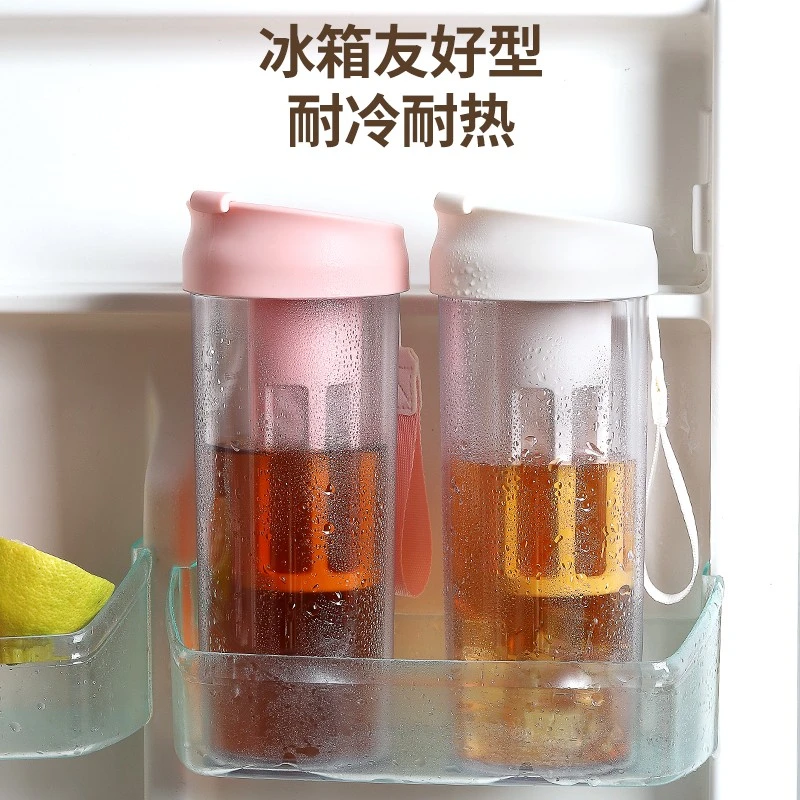
For example, our Cold Brew Tea Infuser Bottle is made from a high - grade, lightweight plastic. This plastic is strong enough to withstand daily use but also allows for easy flexing and manipulation of the bottle and the lid.
2. Elastic Materials for Seals
The seals in our tea bottles are made from elastic materials. These materials create a tight seal to prevent leakage but also allow for easy opening. When the user applies force to open the lid, the elastic seal can stretch slightly without breaking. This reduces the amount of force required to break the seal and open the bottle.
User Testing and Feedback
1. Diverse User Groups
We conduct extensive user testing with a diverse range of users. This includes people of different ages, genders, and physical abilities. By involving a wide range of users in our testing, we can identify any potential issues with the opening mechanism.
For example, we found that older users may have more difficulty with small, tight - fitting lids. Based on this feedback, we adjusted the design of some of our lids to make them larger and easier to grip.
2. Iterative Design Process
We use a iterative design process based on user feedback. After each round of user testing, we make improvements to the design of our tea bottles. If users report that a particular lid is too difficult to open, we will modify the lid design, such as changing the thread pitch or the grip surface, and then conduct another round of testing.

Packaging and Instructions
1. Clear Packaging
Our tea bottles are packaged in a way that clearly shows the opening mechanism. The packaging has pictures and diagrams that illustrate how to open the bottle. This is especially important for new users who may be unfamiliar with the design of our tea bottles.
2. Detailed Instructions
In addition to the packaging, we also include detailed instructions inside the box. These instructions provide step - by - step guidance on how to open the bottle. We use simple language and clear illustrations to ensure that users can easily understand the process.
Marketing and Communication
1. Highlighting the Feature
When marketing our tea bottles, we highlight the easy - to - open feature. We include this feature in our product descriptions, on our website, and in our promotional materials. By emphasizing the ease of opening, we can attract more customers who value convenience.
2. Customer Education
We also engage in customer education about the easy - to - open feature. We create blog posts, videos, and social media content that explain how our tea bottles are designed to be easy to open. This helps customers understand the value of our products and builds trust in our brand.
Conclusion
Ensuring that our tea bottles are easy to open is a multi - faceted process that involves design, material selection, user testing, and communication. By focusing on these aspects, we can provide our customers with tea bottles that are not only functional but also convenient to use.
If you are interested in purchasing our tea bottles, whether it's the Bubble Milk Tea Bottle, Double Wall Tea Bottle, or Cold Brew Tea Infuser Bottle, we would be more than happy to discuss your requirements. Please reach out to us for more information and to start a procurement discussion.
References
- Norman, D. A. (2002). The Design of Everyday Things. Basic Books.
- Nielsen, J. (1993). Usability Engineering. Morgan Kaufmann Publishers.