

How does a double wall Tritan water bottle keep the outside of the bottle dry?
As a supplier of Double Wall Tritan Water Bottles, I've received numerous inquiries about how these bottles manage to keep the outside dry. It's a fascinating topic that combines the principles of thermodynamics and material science. In this blog post, I'll delve into the science behind the dry exterior of our Double Wall Tritan Water Bottles and explain why they're a superior choice for those seeking a reliable and functional hydration solution.
Understanding the Basics of Double Wall Construction
The key to the dry exterior of our Double Wall Tritan Water Bottles lies in their unique double wall design. Unlike single wall bottles, which allow heat to transfer freely between the contents of the bottle and the surrounding environment, double wall bottles create a barrier that reduces heat transfer. This barrier consists of two layers of Tritan plastic, with a vacuum or air gap in between.
The vacuum or air gap serves as an insulator, preventing heat from escaping or entering the bottle. When you fill the bottle with cold water, the double wall construction helps to keep the water cold for an extended period by reducing the amount of heat that can transfer from the outside environment to the water inside. Conversely, when you fill the bottle with hot water, the double wall construction helps to keep the water hot by reducing the amount of heat that can escape from the bottle.
The Role of Tritan Plastic
In addition to the double wall construction, the choice of material also plays a crucial role in keeping the outside of the bottle dry. Our Double Wall Tritan Water Bottles are made from Tritan plastic, a high-performance material that offers several advantages over traditional plastics.
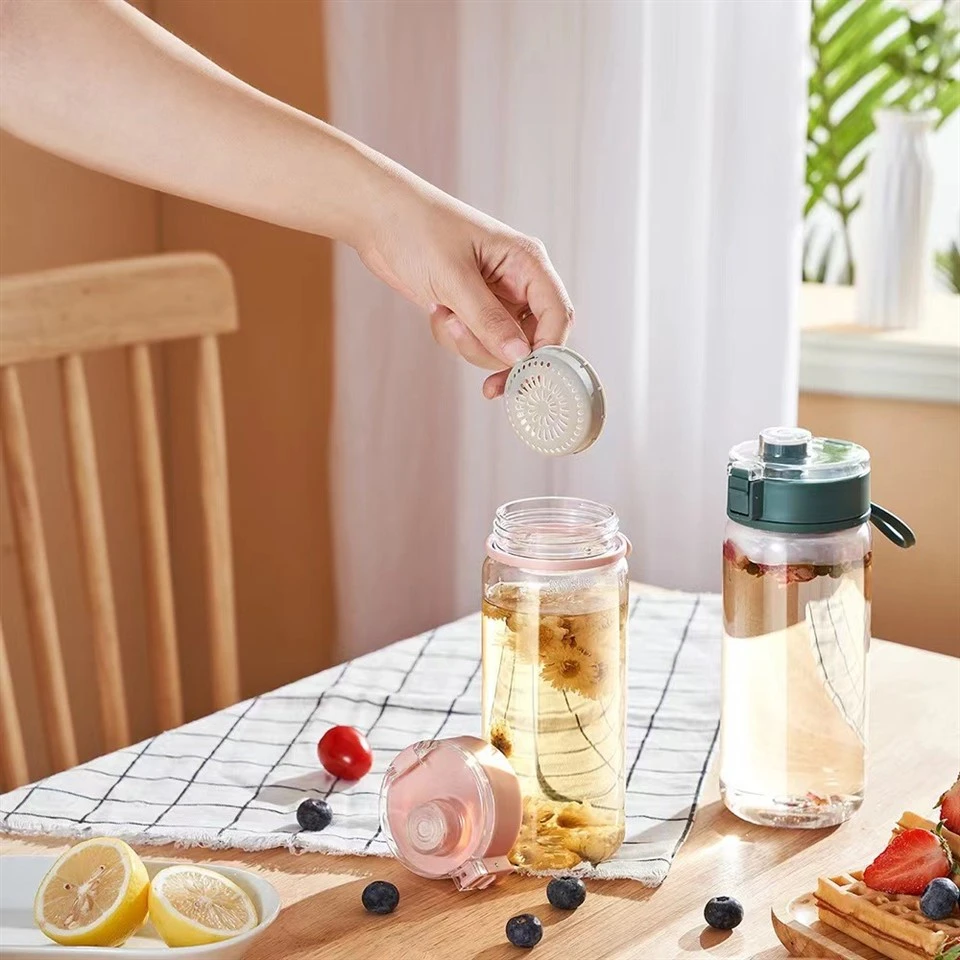

One of the main benefits of Tritan plastic is its excellent resistance to condensation. Condensation occurs when warm, moist air comes into contact with a cold surface, causing the water vapor in the air to condense into liquid water. With traditional plastics, condensation can form on the outside of the bottle, making it wet and slippery to hold. However, Tritan plastic has a low surface energy, which means that water droplets are less likely to adhere to the surface of the bottle. This helps to prevent condensation from forming on the outside of the bottle, keeping it dry and easy to hold.
Another advantage of Tritan plastic is its durability. Tritan plastic is strong and impact-resistant, making it less likely to crack or break compared to traditional plastics. This means that our Double Wall Tritan Water Bottles can withstand the rigors of daily use, whether you're taking them to the gym, on a hike, or to the office.
How the Double Wall Design Prevents Condensation
Now that we understand the basics of double wall construction and the role of Tritan plastic, let's take a closer look at how the double wall design prevents condensation from forming on the outside of the bottle.
When you fill the bottle with cold water, the inner layer of the bottle cools down, creating a temperature difference between the inside and outside of the bottle. The double wall construction helps to reduce this temperature difference by providing an insulating layer between the two layers of plastic. This insulating layer slows down the transfer of heat from the outside environment to the inner layer of the bottle, keeping the inner layer cold and preventing condensation from forming on the outside of the bottle.
In addition to the insulating layer, the double wall design also helps to reduce the amount of moisture that can come into contact with the outside of the bottle. The air gap between the two layers of plastic acts as a barrier, preventing warm, moist air from reaching the outer layer of the bottle. This further helps to prevent condensation from forming on the outside of the bottle, keeping it dry and comfortable to hold.
Other Factors That Affect Condensation
While the double wall construction and Tritan plastic are the main factors that contribute to the dry exterior of our Double Wall Tritan Water Bottles, there are other factors that can also affect condensation.
One of the main factors is the temperature and humidity of the surrounding environment. In hot and humid conditions, the air contains more moisture, which increases the likelihood of condensation forming on the outside of the bottle. To minimize condensation in these conditions, it's important to keep the bottle in a cool, dry place and to avoid exposing it to direct sunlight or heat sources.
Another factor that can affect condensation is the amount of air circulation around the bottle. If the bottle is placed in a confined space with poor air circulation, the warm, moist air is more likely to accumulate around the bottle, increasing the likelihood of condensation forming. To prevent this, it's important to ensure that there is adequate air circulation around the bottle, whether you're using it at home, in the office, or on the go.
Conclusion
In conclusion, the dry exterior of our Double Wall Tritan Water Bottles is the result of a combination of factors, including the double wall construction, the choice of Tritan plastic, and the design features that help to prevent condensation. By understanding the science behind these factors, you can make an informed decision when choosing a water bottle that meets your needs and preferences.
If you're interested in learning more about our Double Wall Tritan Water Bottles or Double Wall Tritan Water Bottle and Tritan Flip Top Water Bottle, please don't hesitate to contact us. We're always happy to answer any questions you may have and to discuss your specific requirements. Whether you're a retailer looking to stock our products or an individual looking for a high-quality water bottle, we're here to help.
References
- "The Science of Insulation." Engineering ToolBox.
- "Properties of Tritan Plastic." Eastman Chemical Company.
- "Condensation: Causes and Prevention." Building Science Corporation.